Audit of the "Bitcoin Case" for the Ministry of Justice
InsightDear journalists,
By: Grant Thornton
August 5, 2025 7 min read
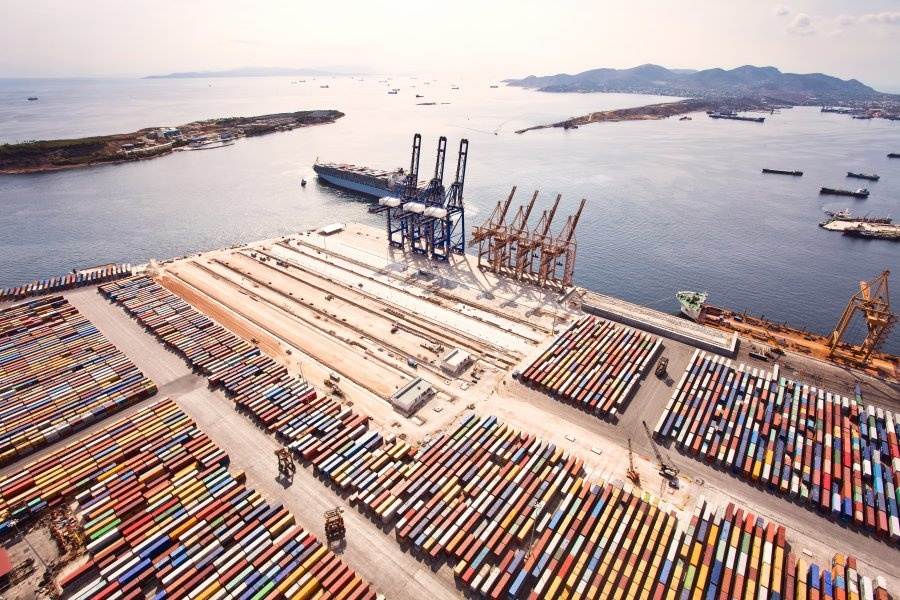
In the first of a new Grant Thornton series on current international business trends, we explore how the changing economic environment can offer growth opportunities for mid-sized companies while their larger competitors adopt a “wait and see” approach.
The outlook for the global economy until the end of 2025 is relatively unclear. Growth is expected to slow significantly, with the OECD cutting its forecast to 2.9% from 3.3% last year, and could fall further if markets continue to be affected by trade barriers or persistent political and geopolitical uncertainty. According to Grant Thornton International Business Report (IBR), mid-sized companies are also feeling the pressure, with their export and international sales expectations having decreased by 3.0% and 4.2%, respectively.
Despite this, the fundamentals of many medium-sized companies remain strong – almost two-thirds of them expect an increase in turnover this year (66.1%), and a similar proportion expect an increase in profitability (63.1%). We are also seeing an increase in the number of companies that expect an increase in sales prices (54%) – such high indicator values underscore their resilience, adaptability, and strategic strength. These qualities may be key to taking advantage of new opportunities arising from ongoing global uncertainty.
The shift towards increased tariffs and trade restrictions on imports by the US administration – and the subsequent retaliatory tariffs – have led to increased trade tensions between the US and many of its key partners, notably the EU and China, contributing to rising economic uncertainty in the mid-market (up 5 percentage points to 60.5%). While we have seen markets recover well from such global disruptions in recent years (particularly in advanced economies), these key strategic changes in global supply chains threaten to be more permanent.
The aforementioned obstacles have led to a surge in activity around the finalisation of new trade agreements that are slowly beginning to change our view of global trade:
We also continue to see significant regional differences in instruments such as interest rates, with the Fed’s cautious stance leading to the largest interest rate differential between it and the European Central Bank in more than two years. All these changes increase uncertainty. However, they can also lead to strategic opportunities that enable an agile and resilient mid-market to adapt, invest and seize opportunities in emerging markets. For example, medium-sized companies in Europe and South America expect exports to increase this year (currently at 49.3% and 58.5%, respectively). Severoamerický trh pak očekává nárůst počtu zemí, do kterých vyváží, o 5 procentních bodů. This proves that opportunities do exist.
Changing trade routes coupled with growing regional differences have prompted a reaction from some of the world’s largest companies. Major expansion plans are being postponed and there is a clear shift towards internal affairs. The persistence of global trade conflicts, volatility caused by elections in key markets and the slower recovery of major economies have only reinforced this cautious approach.
However, the overly cautious environment creates unique opportunities for the mid-sized market. The faster decision cycles and greater appetite for selective risk that underpin this market make mid-sized companies uniquely positioned to act when others are waiting. They could be the ones to reap the benefits of being the first player in newly accessible or typically underserved markets.
While larger companies hesitate, medium-sized businesses can help restart the slowing global economy and even lead the recovery.
To help mid-sized businesses take advantage of these opportunities, we propose a five-point plan that they can apply to increase stability, strengthen resilience and kick-start growth:
Prepare and run detailed scenario models linked to key business routes. Model cost, availability and compliance impacts for multiple possible outcomes based on issues such as continued tariff suspension or acceleration of proposed trade agreements.
Growth is only sustainable when resilience is at its core. Review and update your company’s operating model to ensure flexibility. Modular logistics, a diversified customer base, flexible supply chains and focused leadership can help you respond quickly to changes in business or regulatory policy.
The new generation of trade agreements is increasingly focused on services and digital trade. This represents a huge opportunity for companies that identify and prioritise trade corridors that remove non-tariff barriers to services or digital products. In fact, 63.3% of medium-sized technology companies expect to increase the number of countries they sell to in the next 12 months. Tools such as the OECD Services Trade Restrictiveness Index are a useful guide.
However, the use of emerging trade agreements could help to ease the cross-border flow of goods and materials. Use these agreements as a framework to formalise and strengthen supply chain relationships in strategic markets. Consider using dual provisioning to increase agility in newly advantaged regions.
Mobility and cooperation frameworks in the field of research and development are increasingly important aspects of modern trade agreements and represent an opportunity to explore incentives for research and development and new mechanisms for talent exchange within existing or upcoming trade agreements. Don’t just think about the goods and look to access new skills, ideas and partnerships across borders to gain long-term benefits.
While larger companies continue to adopt a wait-and-see approach, medium-sized companies are well positioned to become the driving force behind the next wave of international growth. Their size and flexibility give them a unique advantage in overcoming uncertainty and exploiting the short-term fluctuations that continue to define the current global economy.
With their deep market knowledge, detailed scenario planning, supply chain diversification, and active engagement at the local level, these companies can help chart a path out of economic downturn and lead a new wave of targeted, profitable, and sustainable growth.




In the first of a new Grant Thornton series on trending international insights, we examine the wider impact of tariffs on the mid-market. The dip in market...

The so-called Chip Act is a key agreement for the European Union, which is currently struggling with high dependence on external semiconductor suppliers. The...

The government has approved the Operational Programme Employment Plus, due to which our country can receive EUR 1.459bn from European funds in the period...

At its meeting, the National Accounting Council (NAC) approved an interpretation relating to the accounting solution of a vacated share and settlement share...

Prolongation of deadlines for the notification requirement for cross-border arrangements

On 9 October 2019, and amendment of act no. 112/2016 Coll., on the use of electronic cash registers, promulgated under number 256/2019 Coll. was published in...

In May 2020 the amendment to the Act on Electronic Records of Sales comes into effect. It concerns entrepreneurs who belong to the 3 rd and 4 th phases. That...
The SAC issued a ruling on February 7 th , 2019 by which it denied the complaining party’s appeal in cassation.
The government has approved an amendment of the foreign exchange activity act, which should take effect on the first day of the third calendar months after...