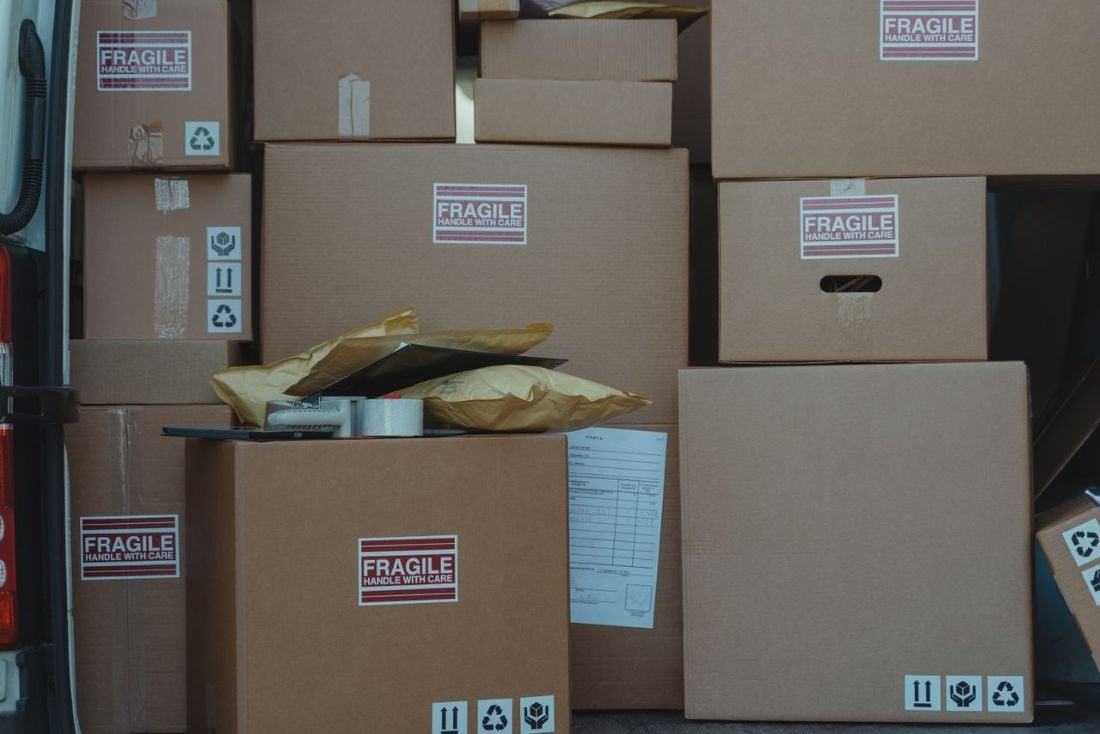
There has been significant buzz surrounding the European Packaging and Packaging Waste Regulation recently. The acronym PPWR is appearing in customer audits, terms of business, and supplier questionnaires. The regulation has applied directly since August 12, 2026. Businesses are no longer asking what they need to complete by a future date; instead, they are focusing on whether they are compliant with current requirements, what lies ahead in coming years, and how to structure this entire agenda to avoid a perpetual administrative burden. Based on our project experience with PPWR, this overview summarizes who is affected, what the regulation truly demands, and where operational friction most commonly arises.
Packaging Is No Longer Just a Cost Item
The role of packaging has transformed fundamentally over recent decades. Originally a practical means to protect products, the rise of self-service retail turned packaging into a "silent salesperson" and a vital marketing tool. PPWR adds a third dimension: packaging is now an independently regulated product whose technical attributes must be verifiable.
Sustainability adds another layer to this equation. According to Eurostat, the EU generated 79.7 million tonnes of packaging waste in 2023—approximately 178 kilograms per capita. Rising waste volumes, pressure on primary raw materials, and climate targets prompted the European Union to regulate packaging much more systematically.
The European Packaging and Packaging Waste Regulation (PPWR) completes this shift. Packaging is no longer merely material used to wrap goods; it is a subject of direct product regulation. Relevant packaging types must be supported by technical documentation and a Declaration of Conformity (DoC); determining who bears responsibility for drafting these documents depends on an entity’s specific role in the supply chain.
While this sounds like additional bureaucracy—and partly is—it is worth looking at the pragmatic side, as the shift also introduces practices that make commercial sense in their own right.
PPWR is a Regulation, not a Directive. Consequently, its technical packaging requirements apply directly across the entire EU without requiring national transposition. However, this does not mean the entire packaging framework is unified. Extended Producer Responsibility (EPR)—encompassing registration, reporting, and take-back scheme funding—remains closely tied to individual national systems. Therefore, in addition to packaging product conformity, companies must track whether EPR obligations arise in specific target jurisdictions.
To substantiate compliance, companies must organize their internal packaging data: material compositions, weights, and supplier origins. This data holds value beyond regulatory compliance. Portfolio mapping frequently reveals that a company uses several near-identical packaging variants that can be rationalized. Beyond simplifying documentation, consolidation can improve supplier bargaining power and streamline inventory management.
The economics of waste management are also evolving. EPR fee eco-modulation will depend increasingly on packaging characteristics, notably recyclability. Design quality will thus directly influence operating costs, not just sustainability reporting. Concurrently, demand is rising for post-consumer recyclates (PCR), mono-materials, and reusable packaging systems.
Overview of Key Obligations and Timelines
The obligations under PPWR are extensive and phase in gradually. For most organizations, this agenda previously lacked a clear internal owner. In summary, key requirements include:
- Restricted Substances: Concentration limits on heavy metals and restrictions on PFAS in food-contact packaging (effective August 2026).
- Declaration of Conformity and Technical Documentation: Mandatory for relevant packaging types (effective August 2026); responsibility depends on the entity’s role in the supply chain.
- EPR and Producer Registration: Implemented at the Member State level, with PPWR gradually harmonizing the structure and operation of national registries.
- Labelling and Marking: Harmonized labels, recycled content disclosures, and standardized markings for waste collection receptacles (effective 2028).
- Recyclability Criteria: All packaging must be recyclable by 2030, recyclable at scale by 2035, and only Performance Classes A and B will remain permitted from 2038.
- Minimum Recycled Content in Plastic Packaging: Phase one targets apply from 2030, with higher thresholds from 2040.
- Packaging Minimization and Empty Space Ratio: Maximum 50% empty space ratio for grouped, transport, and e-commerce packaging, alongside general minimization rules (effective 2030).
- Re-use and Refill Targets: Initial targets apply from 2030, escalating in 2040.
- Waste Reduction Targets: Binding state-level targets (not direct corporate limits) to reduce packaging waste by 5% by 2030, 10% by 2035, and 15% by 2040 compared to a 2018 baseline.
Scope of Application: Who Is Affected?
PPWR impacts a broad cross-section of the supply chain surrounding packaging and packaged products. However, the scope of obligations varies considerably depending on an entity's specific legal role: a business commissioning custom-branded packaging faces different requirements than an importer from a third country or a wholesale distributor. Food and beverage producers, cosmetics manufacturers, pharmaceutical firms, industrial suppliers, private-label brand owners, importers, wholesalers, e-commerce operators, and packaging converters are all in scope.
Few businesses can claim to be entirely exempt. Even where physical goods are not directly manufactured, items are routinely shipped, repacked, or dispatched using transport packaging. The primary question is rarely whether PPWR applies, but rather how much of the operation it impacts and under which regulatory capacities.
Step 1: Clarifying Your Regulatory Roles Under PPWR
The most common misconception encountered in client projects concerns regulatory liability. PPWR does not assign obligations to companies in abstract terms, but rather to specific roles that an entity assumes within a given supply chain flow. Everything flows from these role definitions: who issues the Declaration of Conformity, who registers for EPR and remits fees, and who merely verifies upstream compliance.
1. Manufacturer (and Private Label Owners)
Under PPWR, a "manufacturer" is not necessarily the entity that physically produced the packaging material. The decisive factor is the commercial supply flow—specifically, who commissions the design or manufacture of the packaging or packaged product and places it on the market under their own name or trademark. For instance, a company that contracts out packaging production to its own specifications and places the finished item on the market under its brand assumes manufacturer obligations, including conformity assessments, technical documentation, and issuing the DoC.
2. Packaging Suppliers and Converters
Suppliers of packaging materials serve as the primary source of technical data. Where final compliance responsibility rests with another entity (e.g., the brand owner), that entity must obtain the necessary technical specifications and test reports from the supplier to substantiate compliance. Without supplier cooperation, responsible entities lack the underlying evidence needed for compliance—a dependency that many firms currently fail to manage adequately in contracts or operating procedures.
3. Importers
An importer places packaging or packaged products from a third country (outside the EU) onto the EU market. Prior to placing items on the market, importers must verify that the overseas manufacturer has carried out the appropriate conformity assessment, drawn up the required technical documentation, and complied with relevant product standards.
4. Distributors
Distributors must act with due care to verify that packaging satisfies applicable statutory requirements. If a distributor has reason to believe packaging is non-compliant, it must refrain from making the product available on the market until compliance is established.
5. Role Re-classification Risk (Private Label & Repackaging)
Importers or distributors that place packaging on the market under their own name or trademark—or modify packaging in a manner that affects compliance—assume the legal obligations of a manufacturer. Private labels, local relabelling, repackaging operations, and promotional bundles must therefore be evaluated carefully. Companies cannot rely solely on how their role is designated in legacy contracts or organizational charts.
6. Extended Producer Responsibility (EPR) Producers
The role of an EPR "producer" (governing registration, waste reporting, and eco-fee financing) is distinct from the role of a "manufacturer" for packaging conformity purposes. EPR liability must be assessed on a country-by-country and transaction-by-transaction basis. For example, a Czech company purchasing pre-packaged goods from an EU vendor acts purely as a distributor for conformity purposes. However, if that company sells those goods directly to professional end-users in another Member State, it may incur local EPR obligations in that destination market. Selling to a local distributor in that country could yield a different regulatory outcome. EPR compliance cannot be resolved through a single EU-wide registration.
Key Principle: Roles Are Not Mutually Exclusive
A single company can hold multiple roles simultaneously across different packaging streams. It may act as a manufacturer for custom private-label lines, an importer for third-country finished goods, a distributor for branded domestic stock, and an EPR producer in specific export markets. Assessment must occur at the level of specific packaging flows, target markets, and commercial partners.
What Companies Must Comply With Today
The initial wave of requirements became effective on August 12, 2026, and is frequently misunderstood. This date did not trigger an immediate obligation to redesign all existing packaging. However, relevant packaging must now be covered by technical documentation and a valid PPWR Declaration of Conformity (DoC), with drafting liability tied to supply chain roles.
While the physical packaging itself may remain unchanged in many instances, businesses must be capable of demonstrating who bears legal responsibility for its compliance and presenting the underlying technical data supporting that claim.
Currently, two primary substantive product requirements apply directly to packaging:
- Heavy metal concentration limits in packaging materials.
- PFAS chemical restrictions in food-contact packaging.
Although other obligations phase in over time, this does not justify delaying implementation. Establishing DoC processes represents the most critical immediate priority for businesses, as all subsequent compliance obligations depend on the same baseline data: material composition records, supplier cooperation, and structured data governance.
Building a unified data foundation now avoids duplicative effort in future years when labelling, recycled content tracking, recyclability ratings, and EPR reporting become mandatory.
Implementation Roadmap: Immediate Action Steps
Phase 1: Mapping & Roles
- Map packaging flows and legal roles: Categorize self-branded manufacturing, third-country imports, contract repacking, and pure distribution.
- Audit actual packaging usage across operations: Include sales/primary packaging, grouped/secondary packaging, transport units, and e-commerce materials.
Phase 2: Data Collection
- Link packaging items to SKUs and suppliers: Establish mapping between individual packaging components, product SKUs, and designated vendors.
- Gather missing technical and material data: Request material safety sheets, heavy metal test reports, PFAS declarations, and component weights.
Phase 3: Governance & Documentation
- Establish documentation governance and change management: Assign data ownership, set DoC review workflows, and establish procedures for material/supplier changes.
Practical Implementation Obstacles
Project experience highlights four recurring operational hurdles centered around data accessibility and detail:
1. Granularity Gaps in Existing Data
Packaging data is rarely recorded in sufficient detail. While packaging may exist in Bills of Materials (BOMs) tied to specific products, entries are frequently incomplete. Minor or auxiliary packaging elements (e.g., strapping, tapes, edge protectors, adhesives) are often unrecorded because there was no prior compliance reason to track them. On-site operational audits regularly uncover physical packaging components in warehouses and packing lines that do not exist within corporate ERP systems.
2. Missing Supplier Information and Unclear Data Requests
Technical data regarding material composition, chemical testing, and structural design resides primarily with packaging converters and raw material suppliers rather than brand owners. Most businesses have not previously requested technical specifications to the extent required by PPWR. When vendor outreach begins, companies often struggle to define precisely what documentation is necessary for specific conformity assessments. The issue is exacerbated when component suppliers are not tracked at the item level in purchasing systems.
3. Packaging Grouping Methodology & Cost Management
PPWR requires documentation per "packaging type," but leaves the practical definition of grouping boundaries to individual businesses. A common default response is to manage compliance at the individual Stock Keeping Unit (SKU) level—one product, one documentation file. While seemingly straightforward, this SKU-level approach can dramatically inflate administrative costs.
Under an SKU-level management approach, a company managing three products with identical 500ml PET bottles that differ only by local label languages (e.g., SKU 101 with a Czech label, SKU 102 with a German label, and SKU 103 with a Polish label) would generate three separate technical files and Declarations of Conformity, leading to redundant administrative effort.
Under an optimized technical grouping approach, those three SKUs are mapped to a single technical packaging type (500ml PET Bottle), allowing the business to manage a single technical file and Declaration of Conformity.
Developing an appropriate grouping strategy requires testing different aggregation thresholds. Excessively granular documentation creates redundant overhead, whereas overly broad grouping risks masking material differences that require separate assessment. A standardized grouping template cannot simply be copied from peer organizations; the optimal model depends on packaging portfolio diversity, ERP data structures, and component tracking capabilities.
The Cost of Waiting
While member states must establish national penalty frameworks by February 12, 2027, current uncertainty around enforcement severity does not eliminate commercial and legal exposure. Compliance risks manifest through three distinct channels:
- Formal Regulatory Non-Compliance: If a responsible entity lacks required conformity assessments and technical files, a legal breach exists even if the physical packaging material is fully compliant. Outstanding international EPR registrations also remain an unaddressed liability until flagged by local authorities.
- Commercial Pressure from Enterprise Buyers: Major retail and industrial buyers are incorporating PPWR data declarations into vendor onboarding, supplier audits, and procurement terms. Suppliers unable to provide verified packaging data and DoCs risk commercial disruption prior to formal enforcement by state regulators.
- Cumulative Administrative Backlog: Packaging obligations will expand progressively, with all future milestones relying on identical core dataset—knowing what packaging is used, who is responsible, and how it is composed. Delaying foundational data collection increases future compliance costs.
Implementation Costs and Next Steps
The resource requirements for PPWR compliance depend primarily on portfolio size, structural complexity, and baseline data quality. Smaller organizations with standardized product lines and established supplier relationships can assemble technical documentation relatively quickly. Larger enterprises face broader internal governance challenges: packaging data is often fragmented across manufacturing sites, business units, and procurement teams, requiring clear assignment of operational ownership.
A substantial portion of the implementation workload involves data gathering, vendor management, and internal process alignment rather than purely legal interpretation. Organizations currently fall into two main maturity stages: those establishing baseline roles and data collection requirements, and those automating reporting workflows and change control management.
Both groups face the same strategic decision: treat PPWR as a reactive, administrative exercise repeated with each new regulatory milestone, or establish a data-driven compliance framework with defined governance and change management processes.
Initial steps can remain focused—mapping packaging flows, auditing physical usage, and issuing structured data requests to key suppliers. PPWR compliance is an ongoing operational framework rather than a one-time project. Companies that establish a unified data architecture, clear supply chain role definitions, and robust change management workflows can service ongoing packaging compliance efficiently over the long term.
This article was originally published on finmag.cz
This text was translated by AI.