During March of this year, Czech citizens shared a total of 11.4 gigawatt-hours (GWh) of electricity, the highest amount ever recorded in a single calendar month. This represents a fourfold increase compared to March of last year. In addition to the growing number of participating locations, an increased number of sunny days contributed to this surge. To date, nearly 41,000 applicants have registered for electricity sharing in the Czech Republic. The Electricity Data Centre (EDC) reported these figures today via ČTK. Total net electricity consumption in the Czech Republic in March amounted to 5.4 terawatt-hours (TWh).
The volume of electricity shared this March even surpassed that of last year’s summer months, exceeding the previous record set in August by nearly 20%.
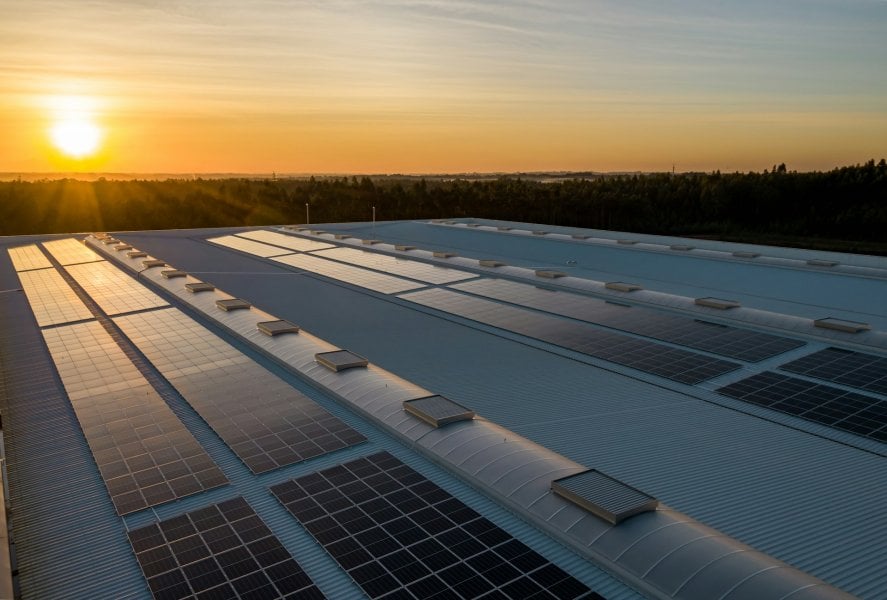
According to data from the Czech Hydrometeorological Institute (CHMI), this March was above average in terms of temperature and significantly lacking in precipitation. The average duration of sunshine reached 174 hours, which is 139% of the norm for the years 1991 to 2020. According to the EDC, this meteorological situation created ideal conditions for production from photovoltaic (PV) power plants.
"The March weather showed us in practice how effective a tool sharing is when combined with photovoltaics in community energy. The record volume of shared electricity—four times higher than last March—confirms that energy decentralization in Czechia has moved beyond theory to become a mass phenomenon. Both individuals and companies have learned to utilize the spring sun to the fullest," said Petr Kusý, Executive Director of the EDC.
The EDC has been operational since mid-2024 and serves as the primary control hub for community energy in the Czech Republic. It registers participants and provides, for example, the evaluation of electricity sharing between active customers by receiving interval metering data from distribution system operators.
After more than a year and a half of the electricity sharing system’s operation, approximately 41,000 participants have enrolled in Czechia. These have organized themselves into 24,355 so-called "sharing groups." Since the service launched in August 2024, the total volume of shared electricity has reached nearly 80 GWh, which, according to the center, corresponds to the annual consumption of 26,000 households—roughly the size of the city of Most.
Later this year, the EDC will expand its services to include new functions for energy storage, technical flexibility aggregation, and a so-called "network traffic light" for smart grid management. These functions are planned for launch in August and are intended to make the use of renewable sources more efficient while increasing the reliability of system operations.
*"Electricity sharing is a simple way to utilize electricity produced by a photovoltaic plant if you do not consume it yourself or choose not to sell it on the spot market.
The principle of sharing lies in the fact that electricity produced in one location is utilized in another consumption point via the distribution grid. The evaluation of sharing then takes place by comparing recorded production and consumption values at the same time—specifically in fifteen-minute intervals. This means that the consumption of electricity must occur simultaneously with its production.
Produced electricity can be shared with one or multiple consumption points. In such cases, you determine the ratio in which the electricity is divided among individual sites. Furthermore, the production and consumption points do not need to have the same electricity supplier."*
Richard Prošek, Manager, Grant Thornton Advisory
This text originally appeared on the server oenergetice.cz.
This text was translated by AI.